Knowledge of food safety at home can prevent various serious food-borne illnesses. Find out about the mistakes to avoid…
We must keep food safe at home for 2 major reasons – Prevention of food borne diseases and prevention of nutritional deficiency. Moreover, when food is not good enough, we have no choice but to throw it away. This leads to unnecessary wastage of food. In general, foods get contaminated at home while handling, storing, cooking, and processing. Therefore, we need to follow certain rules of food safety at home during these activities.
Here are 8 common mistakes which can make food unsafe for consumption.
Improper Handwashing
We wash hands before and after handling foods but often don’t clean back of hands, nails, and wrists. Germs from these areas can get into food. Never skip handwashing with soap and water after touching raw meat, poultry, seafood, eggs, etc. Or else, microbes from unwashed hands will take no time to travel all across the kitchen through direct contact.
Ignoring Date on the Label of Food Packet
We forget to check the ‘Use By’ date given on perishable packaged foods before purchasing or eating. These high-risk frozen foods include meat, poultry, fish, dairy products, dips, chilled ready meals and salads, etc. After the ‘Use By’ date, several dangerous bacteria grow in them. You may not see, smell or taste anything bad when you open that food packet. Still, its content is no longer safe to eat. Spoiled food consumption leads to food poisoning. Store perishable food material following the freezing instructions provided on its label. Finish it up before the ‘Use By’ date.
Unintentional Cross-Contamination of Food
Cross-contamination happens when raw meats, fish, and poultry and ready-to-eat foods like salads are kept together. These raw foods carry plenty of pathogens that contaminate all foods kept nearby. So, special storage arrangements are essential. Keep them separate from cooked or any other food items. The safest option is to refrigerate them in an airtight container or packed condition at 4°C or below. Thus, you stop accidental spread of bacteria.
Peeling Fruits and Vegetables Without Prior Cleaning
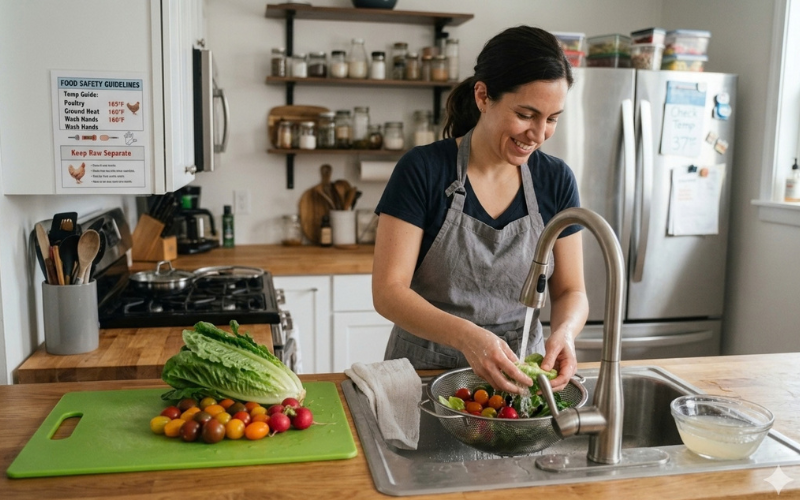
Wash raw fruits and vegetables thoroughly under running water before peeling and cutting. Otherwise, dirt, residues of agricultural chemicals and germs from the surface will enter into the edible part of food. If the outer skin is rough and uneven, scrub it with a stiff-bristled, clean brush for a good rinse. However, do not use any soap or detergent on them.
Marinating Food at Room Temperature
Germs and bacteria get the chance to multiply faster on marinated food at room temperature. Keep in mind marinating ingredients cannot kill bacteria but only slows down its growth. The safe limit of temperature to marinate food is 4°C or below. Always tuck it inside the fridge in a fully covered container to prevent spoilage. Bring it out 15-30 minutes before cooking to take the chill off.
Undercooking Packaged and Frozen Food
Packaged food carries cooking guidelines on its label. It includes the right temperature, time period of cooking, recommended appliance, etc. If these instructions are not followed, then packaged food is not fit for consumption. Do not stop cooking just because it looks ready. Stir the food for an even distribution of heat. If required, use a food thermometer to check the exact temperature. In the end, resting time is equally important to complete the cooking process and ensure food safety.
Poor Leftover Management
Sometimes, we delay putting leftover cooked foods into the refrigerator. Ideally, leftover foods should go inside the fridge within 2 hours of cooking. Put them in small, shallow containers for refrigeration. Large and deep containers often prevent instant cooling of food.
Then, we consume leftover foods kept in fridge after several days. Even if the food is inside the fridge, we must consume it within 2-3 days of cooking. In summer months, use up cooked meals in 1 or 2 days. Before serving, always reheat leftovers to 75°C and get rid of bacteria from cold food.
Unclean Kitchen Tools and Accessories
Along with the abovementioned measures of food safety at home, maintain a neat and tidy kitchen. Ensure utensils, cutting boards, knives, and food containers remain clean. These items come in direct contact with food. Wash kitchen towels in hot water and mild detergent to keep them germ free. Wipe off kitchen appliances, sink area, fridge handle, cupboard knobs, etc. to avert bacteria buildup.
FINAL NOTE: Food safety is necessary in every household. Keep food extra safe at home when you have children, older adults, and pregnant women as they are at a higher risk of falling sick.