Keeping food safe in summers is quite an uphill task. Home cooks can overcome its challenges by following some simple food safety tips. Read on…
Food-borne illnesses rise in summer season due to bacterial overgrowth. In hot and humid conditions, foods spoil faster than usual because of these bacteria. Consumption of contaminated food leads to food poisoning and digestive issues. Home cooks need to be extra careful while handling and storing perishable foods. It includes raw meat, dairy products, salads, cut fruits, etc. Proper refrigeration is vital to ensure summer food safety.
Safe Temperature for Food Storage in Summer
When outdoor temperature is in the range of 4-60°C, bacteria multiply at an accelerated rate. So, make sure the temperature is above or below this range when it comes to storing perishable foods.
Set temperature of fridge around 2-4°C to prevent spoilage of food. Safe temperature Inside freezer is (–18)°C. Know that keeping summer food safe and fresh become more challenging if your refrigerator is overpacked with foods and summer drinks. This prevents proper circulation of cool air.
Summer Food Safety Tips for Meat, Poultry, Eggs, and Seafood
Raw meats, poultry, eggs, and seafood should enter a frozen zone within 1 hour of purchase. You must not refrigerate them for an indefinite period. Use them up in 2-5 days.
Marinating raw food (meat, fish) at room temperature in summer is hazardous. Store marinated food inside fridge. If required, marinate it for a longer duration to get desired results.
Cook raw meats, poultry, eggs on adequate heat to destroy harmful bacteria. Stir well to cook it from all sides.
Summer Food Safety Tips for Milk and Dairy Products
Milk and dairy products spoil easily in summer. Refrigerate them as soon as possible after purchase and after every use.
Refrigerator door is unsafe for storing milk and milk products as it gets warmer when we open the fridge. Always keep milk and dairy products either on shelves or in freezer.
Summer Safety Tips for Cooked Meals
Serve cooked foods within 1 hour after preparation. Freshly cooked food must go inside fridge within 2 hours of cooking.
Cook in small quantity to reduce chances of leftovers. Store a leftover in 2-3 small, flat containers for faster cooling.
Take out one container for reuse purpose in your next meal and finish it off. Clear up any leftover food within 1-2 days at this time of the year.
Summer Food Safety Tips for Salads and Desserts
Take out salads and frozen desserts from refrigerator just before serving.
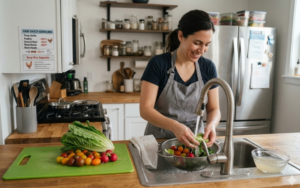
Put chopped salad greens and herbs in an airtight container and place it in crisper drawer. It will prevent them from air drying. If your salad recipe has juicy ingredients like tomato and onion, cut and store them in separate containers inside fridge. Keep homemade salad dressing in another container. Toss all salad components together including dressing and salt when you are ready to eat. Thus, the risk of salad dressing going bad does not arise and the greens remain crisp.
Dessert menu often consists of ice cream, chocolate, butter which melt out in minutes under the influence of summer temperature. Whipped cream undergoes rapid spoilage. Therefore, it is advisable to place both dessert as well as serving bowls in coldest part of fridge, that is the freezer. Bring them out at the end of a meal. Serve dessert in those chilled serving bowls.
Other Basic Safety Measures for Summer Months
Food spoilage is a common occurrence in summer. Contamination often changes look, texture, and smell of food. Sometimes, there may not be any noticeable changes. Whatever be the case if doubt arises or you have stored foods for a long time, throw them out right away.
Wash used dishes, utensils, cutting boards properly and wipe with paper towel. Any food residue stuck on them can be a seat of harmful bacterial activity.
ADDITIONAL Outdoor Food Safety Tips: If you are taking food away from home in lunch box, opt for non-perishable foods. It is the safest option in summers. When you need to carry perishable foods outdoors, use a cooler filled with ice cubes.