Indoor plants have some special needs in autumn and winter. Adjust Indoor plant care routine as per weather condition. Know more…
Autumn and winter are cold and dark months of the year. Daytime is shorter from October to February. During this time, indoor plants grow at a slower pace. There are 2 major factors for which you need to modify your regular indoor plant care plan:
- Low atmospheric temperature at the peak of winter season.
- Lack of moisture in the air.
Houseplants come under a lot of stress at this time of the year. It slows down its biological processes to cope with changing living conditions.
Following 9 indoor plant care tips for autumn and winter will keep your leafy friends happy and healthy.
Meet Daylight Requirement
Indoor plants must receive sufficient daylight for survival. Place them near south or west facing windows. Daytime shortens in these months but daylight requirement of plants remains the same. It depends on daylight to prepare its own food using the photosynthesis process. Insufficient daylight badly affects basic plant health.
Protection from Cold Air
Houseplants have a natural ability to adjust with colder indoor temperatures. However, you need to protect it from cold winds coming from outside. Plant cells cannot bear the freezing temperature and go into a state of cold shock. Place plants at a distance from doors and windows to shield it from unexpected cold spells. Pull down window shades or curtains after sunset.
Avoid Direct Heat Exposure
This is a vital indoor plant care tip for plant owners who use indoor heating system in autumn and winter. Any direct exposure to artificial sources of heat scorches plant leaves and dries them up. Potted soil dries out faster. The distance between houseplants and radiator, heating vent, fireplace, etc. should be at least 3-5 feet.
Meet Moisture Requirements
Dry weather conditions in autumn and winter are challenging for indoor plants. You can try any of the 3 tricks:
- Keep them in the kitchen or bathroom.
- Mist them frequently.
- Put a tray under the pot which will hold drained out water.
Reposition Indoor Plants in Autumn and Winter
Bring all plant pots closer and form a group. This grouping helps houseplants to trap moisture due to transpiration; water evaporates from plant surfaces and diffuses into the atmosphere. As a result, it adds some humidity to dry indoor air. Moreover, clustering of pots retains a bit of warmth. Together, these plants insulate each other and bear the brunt of unpleasant cold temperatures.
Change Watering Schedule
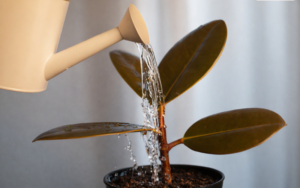
Houseplants do not need much water during this period. Dig a finger into the soil. If it feels dry, then only go for watering and not before that. Unused water makes the soil soggy and causes decay in plant roots. Do not use icy cold water on plants. The ideal temperature range of water is 18°C – 24°C.
Keep Surface of Plant Leaves Clean
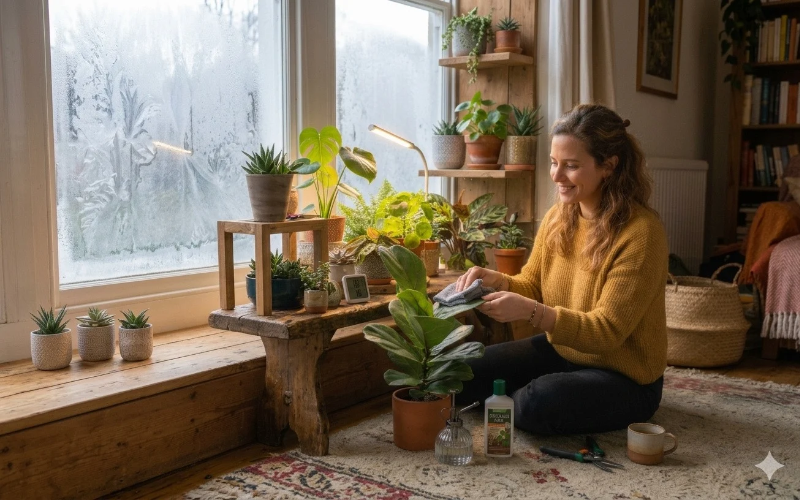
Make sure plant leaves are free from dirt and dust to prevent clogging of its pores. Wipe off the surfaces with a damp washcloth. As a result, your plant will be in a better position to utilize daylight effectively.
No Extra Feeding
Indoor plants do not need any fertilizer in autumn and winter. If you apply fertilizer to a plant in its dormant state, it cannot absorb additional nutrients. The worst part is chemicals from fertilizer will burn the plant roots. Resume fertilizing in the growing season of spring.
Regular Inspection for Pest Infestation
Be careful about pest infestation in these two seasons. Conduct a thorough inspection of all indoor plants every week. The main problem areas are – underside of leaves, junction of leaves and stem, soil surface near rim of the pot. If you notice any webbing strands or sticky residues there, wipe them off with a damp cotton ball.
Final Note: These Indoor plant care tips for autumn and winter will help your leafy friends to navigate through harsh colder months. Even if it faces growth issues, don’t panic. With the onset of spring season, its growth and renewal process will gain momentum.